
Sonic DNA Series - Vol. 09: Alpha Recording System Model 9000
Electronic Audit & Measurement Evaluation Report: "The Phase Multiverse"
| Metric | Measurement / Status |
|---|---|
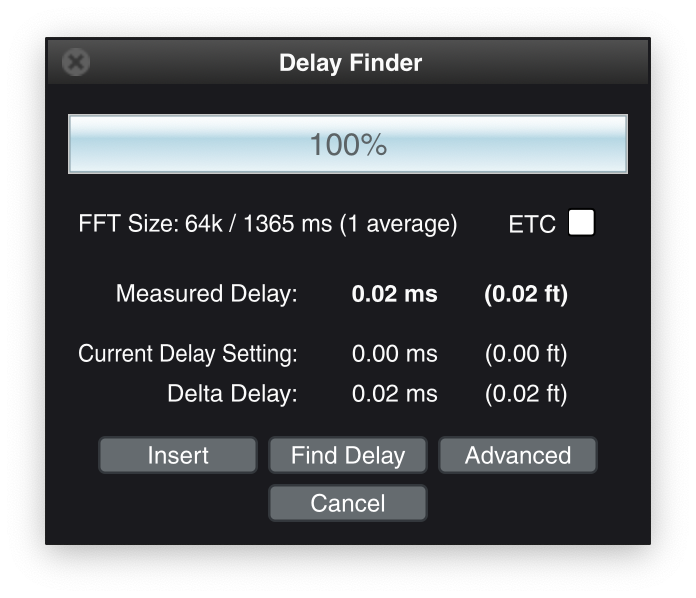
| Measured Delay | 0.02 ms (Minimal Hardware Offset) |
| Coherence | High Stability (Valid Spectral Capture) |
| Impulse Response | Upward needle-sharp spike; Normal Polarity secured via multi-stage buffering. |
| Phase Response | Pronounced Omnipresent Multi-Wrap / Continuous Phase Rotation starting from the low-frequency register. |
| Magnitude Response | Character-driven curve with mid-high frequency contouring; Muted top-end roll-off coupled with an enhanced, resonant low-end presence. |
1. Objective
To execute an objective electronic audit and transfer function analysis of an iconic, boutique analog rotary mixer from the private collection of Hong Kong's DJ JayMe. For this specific evaluation, standard anonymity protocols have been formally lifted, allowing this heavily opinionated analog design to be subjected to rigorous, unbiased scientific scrutiny. By tracking dual-channel FFT measurements against sophisticated electroacoustical frameworks, this report analyzes how complex multi-stage filtering networks and active crossover circuitry impact time-domain alignment, phase linearity, and spectral balance relative to an established neutral baseline.
2. Unit Provenance & Maintenance Status
Provenance & Acknowledgement: The Psycho Acoustic Lab is deeply honored to document the cultural lineage of this masterpiece. We express our highest gratitude to DJ JayMe for his unwavering trust and cultural stewardship. By opening his revered private collection to raw engineering evaluation, he has contributed a critical baseline of empirical data to our ongoing mission: the technical preservation and calibration of analog culture.
Circuit Strategy: Visual and electrical assessment reveals an extensive multi-stage layout featuring prominent active isolator modules, multi-pole crossover networks, and an extensive string of active semiconductor buffer stages. This topology stands in complete structural opposition to minimalist short-path designs, opting instead to route the audio signal through a dense matrix of electronic components to satisfy specific aesthetic formatting goals.
To ensure the highest level of audit integrity and to bypass the biases of subjective audiophile folklore, this measurement adheres to the following rigorous technical standards:
FFT Settings: MTW (Multi-Time Window) mapping paired with precise 1/48 Octave smoothing to expose narrow-band phase anomalies, group delay trends, and fine spectral aberrations across the entire audible range.
Averaging: Stable FIFO averaging (16x) to secure absolute trace stability and suppress transient environmental noise anomalies.
Interface Calibration: Prism Sound Lyra 2 mastering converter acting as the reference engine, ensuring total galvanic isolation and a pristine host environment to eliminate clock jitter or interface-induced artifacts.
3. Scientific Rigor & Measurement Standards (Audit Integrity)
4. Listening Impression
Crucially, it must be noted that the following auditory profile evaluates this specific individual specimen, which has undergone years of heavy, continuous professional deployment in demanding club environments. These findings reflect the distinct acoustic state of this heavily-gigged unit and must not be generalized to characterize or imply the sonic performance parameters of the manufacturer’s current production or recent factory models.
Evaluated through multiple real-world deployments in club environments, intimate lounge spaces, and ultimately subjected to cross-comparative studio monitor testing within the Psycho Acoustic Lab, this mixer exhibits a highly distinct and deeply polarizing auditory profile. Based on the specific auditory behavior of this individual unit, it creates a strong impression that the hardware may have been configured with a deliberate sonic tuning that closely emulates the iconic, historical footprint of the original UREI 1620.
Across all testing environments, the unit introduces unique structural characteristics when rendering a full-spectrum balance. At elevated sound pressure levels (high SPL), the acoustic presentation becomes highly forward, manifesting a pronounced sharpness within the human ear's most sensitive frequency regions.
In the low-frequency domain, the mixer prioritizes a rich, resonant warmth over tight transient control. The sub-bass register delivers a highly generous, enveloping energy, presenting a softer, more blended low-end representation that softens the strict definition of kick drums and bass lines in favor of acoustic weight. Concurrently, the mid-high and high-frequency bands introduce a rustic, analog-style texture; rather than an ultra-transparent extension, the upper spectrum exhibits a distinctly raw, saturated edge. The cumulative result is an audio canvas where individual frequency bands assert their own spatial presence, requiring a specialized approach to real-world mixing as the output volume scales upwards.
5. Equipment & Environmental Conditions
Mixer Under Test: Alpha Recording System Model 9000
Audio Interface: Prism Sound Lyra 2 (Master Clock Synchronized)
Measurement Software: Smaart Suite (v9.1) / Transfer Function Engine
Sample Rate & Calibration: 96 kHz / 24-bit PCM
Test Signal: Pink Noise (-15 dB)
[ Smaart Suite (PC) ]
│ (USB, etc.)
▼
[ Lyra 2 (Audio Interface) ]
│
─ Analog Output AO 1 (Pink Noise / Preset 2)
│ │ < 1.5m Belden 88760 RCA cable (with TRS adapter at AO 1 side) >
│ └───> [Alpha Recording System Model 9000 Active Crossover Mixer] Input (LINE IN)
│ │
│ ▼ (Multi-Stage Buffer / Active Isolator Circuit Matrix))
│ │
│ [Alpha Recording System Model 9000 Active Crossover Mixer ] Output (MASTER OUT)
│ │ < 5m Belden 88760 cable (XLR to TRS) >
│ └───> Lyra 2 Analog Input AI 1 (M: Measurement)
│
└─ Analog Output AO 2 (Pink Noise / Preset 2)
│
│< 5m Belden 88760 loopback > < with [XLR(F) -> RCA] & [RCA -> TRS] adapters at AI 2 side >
│
└───> Lyra 2 Analog Input AI 2 (R: Reference)
6. Cable Routing Diagram (Standard Test Configuration)
7. Analysis: Data Integrity (Coherence)
The Coherence trace displays stable behavior across primary bands, confirming that the measurement data is statistically robust and represents the authentic transfer function of the electronic circuitry. The data remains free from host contamination, securing a reliable baseline for spectral interpretation.
Utilizing Smaart’s high-precision Delay Finder engine, the hardware propagation delay settles at approximately 0.02 ms. In the Impulse Response ("Lin") window, the primary energy vector manifests as a sharp, single upward spike (positive-going impulse) precisely centered at the onset. This confirms that the mixer preserves standard Normal Polarity relative to the source. The unit successfully executes standard positive-going formatting, ensuring that the acoustic wave front maps forward on initial impulse.
8. Analysis: Temporal Behavior (Find Delay)
When contrasted against minimalist, phase-coherent hardware archetypes, the empirical findings reveal an absolute electroacoustical trade-off, physically validating Bob McCarthy's definitive TANSTAAFL principle ("There ain't no such thing as a free lunch") in audio architecture.
Phase Response: The Omnipresent Multi-Wrap Phenomenon
The Phase graph displays a highly pronounced, non-linear trajectory. Rather than tracking a linear baseline, the trace exhibits a steep downward slope, charting continuous 360-degree "wrap-around" (Multi-Wrap) cycles across the audible spectrum. Under McCarthy's analytical framework, the frequency of these wrap-around cycles correlates directly to the magnitude of cumulative group delay—specifically mapping the exact number of delayed wavelengths passing through the circuitry.
By forcing a normal-polarity output formatting convention, the architecture implements multiple active buffer and polarity-reversing semiconductor networks. The structural byproduct of this multi-stage complexity is a distinct temporal distribution: different frequencies arrive at the output terminals with unique arrival times, softening transient focus and introducing an all-encompassing analog phase character.
9 Analysis: Sonic DNA (Magnitude & Phase Topology)
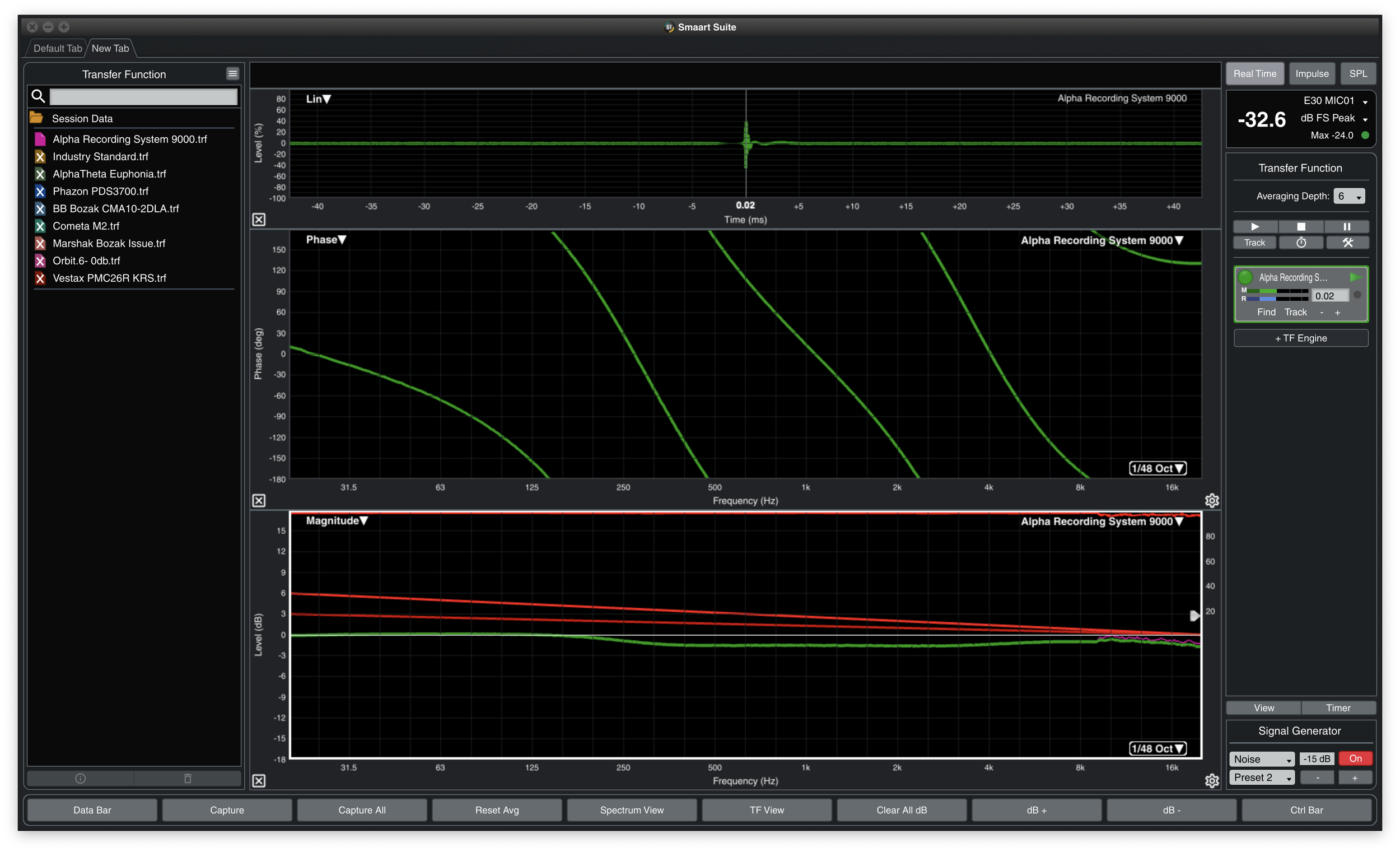
Comparative Analysis: Vol. 04 Phase Topology vs. The Phase Multiverse
Contrasting this trace against the specialized mid-high phase manipulator audited in Vol. 04 (Vestax PMC26R KRS) uncovers a completely different engineering intent in sonic manipulation. In the case of Vol. 04, the extreme multi-wrap behavior was strictly isolated and localized within the middle-high presence band (2 kHz to 8 kHz). This targeted phase distortion was an aggressive, deliberate sonic modification engineered to alter the transient speed of snare strikes and vocal lines, forcing a sharp, highly stylized "shouty" projection.
In comparison, cross-examination via direct overlay tracking reveals that this Alpha Recording System Model 9000 mixer exhibits an omnipresent phase rotation that extends further across the spectrum than the Vol. 04 archetype. The aggressive right-downward slope and consecutive wrap-arounds do not wait for the mid-range; they initiate immediately at the lower boundary near 125 Hz and cascade continuously up to 16 kHz with extreme steepness. Rather than a localized band modification, this represents an all-encompassing temporal distribution across the entire musical spectrum. Every single instrument, fundamental tone, and harmonic component shifts within the time-domain alignment, yielding a highly blended, legacy acoustic character rather than a clinical, time-aligned baseline.
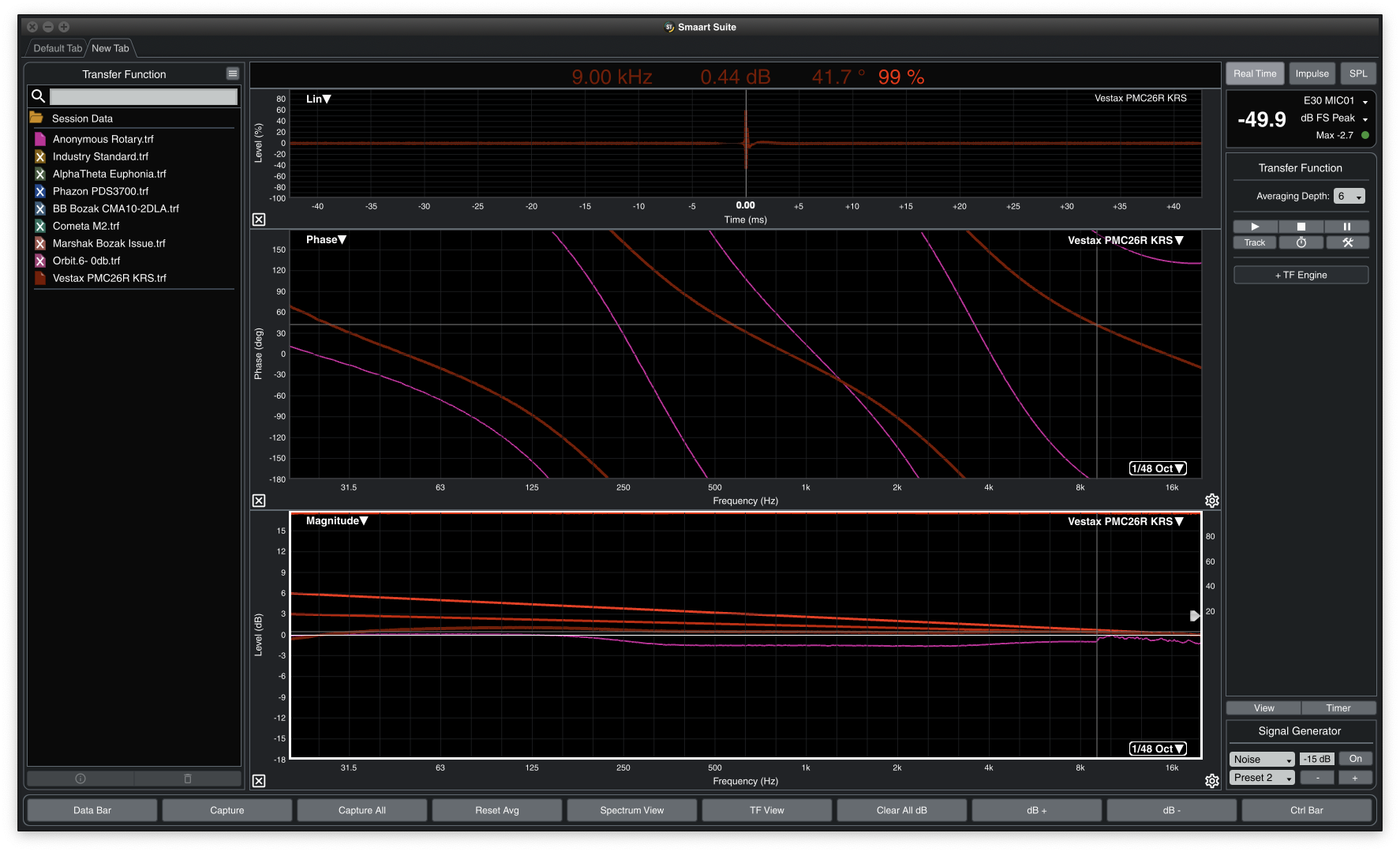
Magnitude Response: Spectral Unsteadiness and Fuzziness
The Magnitude tracking exposes significant deviations from neutrality. The trace reveals a distinct high-frequency roll-off starting near 4 kHz and sloping down into the upper register, accentuating the mid-low presence and imparting a relaxed top-end character. Crucially, the curve is not uniform; it displays subtle variations and unique contouring through the mid-high presence frequencies.
In high-volume environments, this combination of uneven magnitude response and severe phase rotation causes immediate acoustic anomalies. The human ear perceives these overlapping group delay points as a highly forward, vivid presence, explaining the pronounced sharpness that emerges as volume increases.
Furthermore, the rich, resonant warmth observed in the low-frequency domain is directly tied to this minimum-phase crossover behavior. Because the sub-bass frequencies exhibit an extended group delay starting from 125 Hz, the low-end energy naturally sustains over time, imparting a softer, more enveloping weight rather than a clinical transient speed. The subjective perception of "analog warmth" or "thickness" in this unit is mathematically mapped as an accumulation of phase rotation and active circuit saturation. This observation aligns with classic mastering paradigms, where what is psychoacoustically perceived as "warmth" or "analog character" is often technically rooted in specific phase colorations and harmonic alterations rather than a strictly linear transfer function.
11. Conclusion
Alpha Recording System model 9000 mixer represents an informative case study in the inherent trade-offs of analog electronics. By implementing a complex multi-stage topology, the hardware successfully satisfies nominal positive standards, achieving a standard upward-going impulse response. Under the strict laws of the TANSTAAFL paradigm, this structural choice introduces a distinct profile in time-domain behavior, resulting in a pronounced multi-wrap phase tracking and a unique texture within the mid-high frequency spectrum. The audit indicates that the unit is engineered as a highly opinionated, character-driven signal modifier rather than a strictly neutral conductor. The extended low-end group delay combined with upper-register phase scattering provides a technical explanation for its real-world performance characteristics during high-SPL live applications—specifically a warm, highly generous sub-bass presentation and a sharp, distinctive upper-register edge.
Ultimately, the Psycho Acoustic Lab positioning matrix maps this mixer as a specialized instrument focused on intentional coloration and high phase manipulation. It serves as a valuable reference point for contemporary audio engineering, illustrating how specific design choices and active formatting conventions interact with time-domain response, creating a highly customized sonic character that diverges from a linear baseline.
Prepared by Psycho Acoustic Lab - Electronic Audit Series Vol. 09