
Sonic DNA Series - Vol. 07: AlphaTheta Euphonia
Electronic Audit & Measurement Evaluation Report: "The Hybrid Modern Rotary Mixer"
| Metric | Measurement / Status |
|---|---|
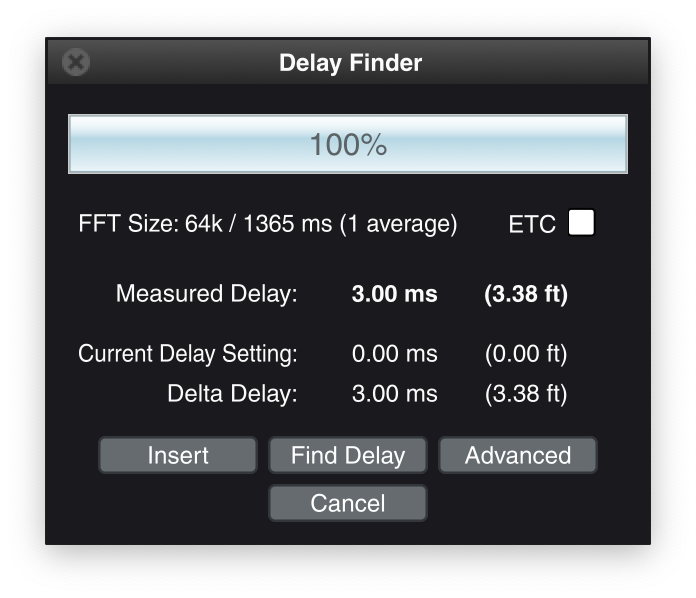
| Measured Delay | 3.00 ms (Digital Processing Latency) |
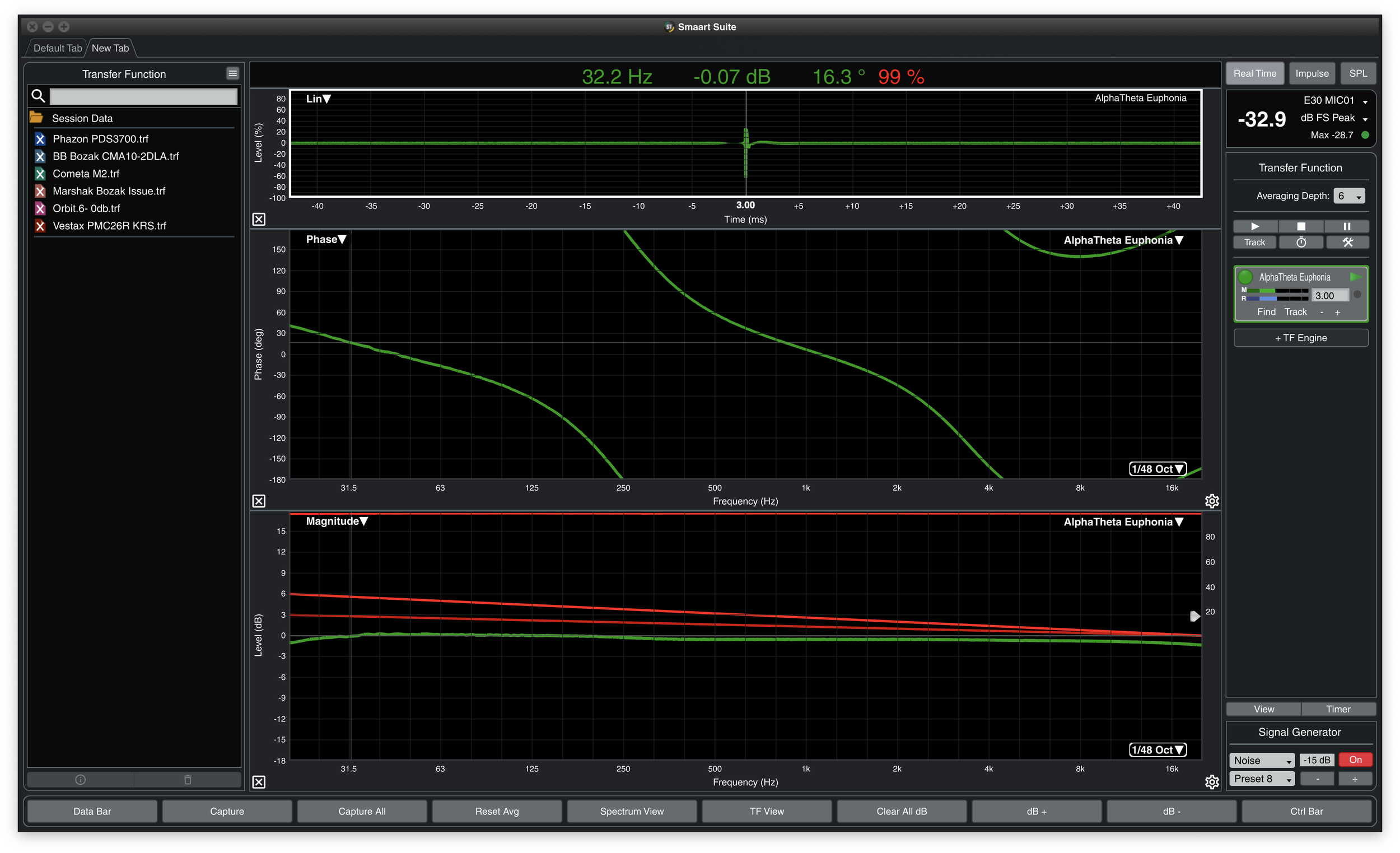
| Coherence | 99% - 100% (Extreme Reliability / Pristine Signal) |
| Impulse Response | Sharp downward spike; Reversed Polarity. |
| Phase Response | Layered Structure: Digital Latency + Analog Character. |
| Magnitude Response | Perfectly flat at 0 dB (Absolute Unity Gain). |
1. Objective
To conduct a precise electronic audit of the AlphaTheta Euphonia hybrid rotary mixer using a dual-channel FFT analyzer. This audit aims to visualize its unique "Sonic DNA” a synthesis of modern digital precision and the musical coloration introduced by its Rupert Neve Designs (RND) transformers.
2. Unit Provenance & Maintenance Status
Internal Architecture: The euphonia features a sophisticated digital-analog hybrid architecture. While the core signal processing is handled by high-resolution 32-bit digital technology, the final output stage is enriched by an analog transformer circuit co-developed with Rupert Neve Designs. This combination is designed to deliver the clinical precision of digital audio alongside the "glossy and rich" harmonic character of legendary analog hardware.
Signal Processing: The unit operates at a 96 kHz sampling rate, with 32-bit A/D and D/A converters for the primary signal paths. This high-fidelity digital foundation ensures that the "transparency" of the original source is preserved before reaching the analog transformer stage.
To ensure the highest level of audit integrity and to avoid the pitfalls of "superficial metrics" (as critiqued by GoldenSound), this measurement adheres to the following rigorous standards:
FFT Settings: MTW (Multi-Time Window) with 1/48 Oct smoothing for high-resolution analysis of the noise floor and harmonic structure across all frequency bands.
Averaging: Stable FIFO averaging (16x) to eliminate transient noise and reveal the true electronic behavior.
Host Noise Isolation: The use of the Prism Sound Lyra 2 as the measurement interface ensures complete galvanic isolation from the PC host noise, providing a "Pristine" measurement environment that eliminates jitter and electronic contamination.
Holistic Assessment: We reject the reliance on a single "SINAD" score. Instead, we analyze the relationship between Magnitude, Phase, and Impulse response to understand the "Sonic DNA" in a musical context.
3. Scientific Rigor & Measurement Standards (Audit Integrity)
4. Listening Impression
The impression of the Euphonia is, in a word, "Refined." No frequency band ever stings the ears, and every sound is delivered in a comfortably organized manner. It combines the overwhelming resolution and transparency of digital processing with the unique density of analog brought by the Rupert Neve transformers. It truly embodies "the best of both worlds," making it a masterpiece among modern rotary mixers.
5. Equipment & Environmental Conditions
Mixer Under Test: AlphaTheta Euphonia
Audio Interface: Prism Sound Lyra 2
Software: Smaart Suite (v9) / Sample Rate: 96 kHz
Test Signal: Pink Noise (-15 dB)
[ Smaart Suite (PC) ]
│ (USB, etc.)
▼
[ Lyra 2 (Audio Interface) ]
│
─ Analog Output AO 1 (Pink Noise / Preset 2)
│ │ < 1.5m Belden 88760 RCA cable (with TRS adapter at AO 1 side) >
│ └───> [Euphonia] Input (LINE IN)
│ │
│ ▼ (Passes through Euphonia internal DSP/Transformers)
│ │
│ [Euphonia] Output (MASTER OUT)
│ │ < 5m Belden 88760 cable (XLR to TRS) >
│ └───> Lyra 2 Analog Input AI 1 (M: Measurement)
│
└─ Analog Output AO 2 (Pink Noise / Preset 2)
│
│< 5m Belden 88760 loopback > < with [XLR(F) -> RCA] & [RCA -> TRS] adapters at AI 2 side >
│
└───> Lyra 2 Analog Input AI 2 (R: Reference)
6. Cable Routing Diagram (Standard Test Configuration)
7. Manufacturer Specifications & Benchmarks
| Metric | Specification |
|---|---|
| Sampling Rate | 96 kHz |
| A/D & D/A Converters | 32-bit (Master, Booth, Send, CH Input) |
| S/N Ratio (Line) | 105 dB (Rated output, A-Weighted) |
| Frequency Characteristic (Line) | 20 Hz to 40 kHz |
| Max Output Level (Master) | +25 dBu (Rated) |
| Crosstalk (Line) | 82 dB |
| Master Isolator Slope | 18 dB/oct |
8. Analysis: Data Integrity (Coherence)
The Coherence (red trace) sits pinned at approximately 99% to 100% across the audible spectrum. This indicates the measurement is "Pristine," with the highest scientific integrity. It confirms that the data is unaffected by external noise or electronic interference, proving that the Magnitude and Phase results are an absolute representation of the Euphonia's internal architecture. This stability highlights a significant leap in signal purity compared to the residual noise floors often seen in unrestored vintage equipment.
Utilizing high-resolution 96 kHz sampling, the measured delay was identified at exactly 3.00 ms. This latency represents the "Digital Identity" of the mixer—the time required for high-precision 64-bit DSP processing. In contrast to pure analog mixers like the Orbit.6 or Cometa M2 (Vol. 01–03), which exhibit 0.00 ms of latency, the Euphonia trades this fraction of real-time immediacy for a "Digital Canvas" of absolute magnitude transparency and extreme S/N ratio, upon which its RND transformers paint their harmonic texture.
9. Analysis: Temporal Synchronization
Impulse Response: The Polarity Discovery
The "Lin" graph displays a razor-sharp spike at the 3.00 ms mark. Notably, the spike is pointing downward, indicating that the Euphonia outputs a Reversed Polarity signal in its baseline state. This discovery is a critical finding for sound system optimization, identifying a fundamental "Inverted" characteristic in its DNA.
Phase Response: The Layered Architecture
The phase graph exhibits a layered structure of digital and analog fingerprints. The steep, continuous wrap-around slope is the mathematical result of the 3.00 ms DSP latency (Digital). However, the musical warmth and character of the RND transformers appear as the subtle smoothness and consistency layered upon these steep curves. This bridge between mathematical latency and analog timing shifts creates the Euphonia's unique "Refined" temporal character.
Magnitude Response: Absolute Transparency
The Magnitude graph demonstrates absolute transparency, sitting precisely on the 0 dB center line. This confirms that the Euphonia provides a neutral, high-fidelity foundation, allowing the music and the intentional transformer saturation to remain the primary colors of the sonic output.
10. Analysis: Sonic DNA (Magnitude & Phase)
The Rupert Neve Designs Signature: Analog-Digital Synergy: The integration of the Rupert Neve Designs transformer at the output stage is the defining element of the euphonia's Sonic DNA. Our Smaart audit observes the specific phase characteristics and harmonic density introduced by this magnetic circuit, which "breathes life" into the digital signal.
Calculated Saturation: The manual confirms that users can intentionally add "moderate amount of saturation" to the master sound by adjusting levels into the white range of the Mix Level Meter. This confirms that the euphonia is designed to be pushed, allowing the transformer to color the output musically.
11. Conclusion
The Sonic DNA of the AlphaTheta Euphonia is a product of stunning contrasts, merging modern Hi-Fi transparency with rich vintage temporal characteristics. Crucially, the identification of its Reversed Polarity serves as a vital practical guide: when installing the Euphonia in professional club or festival environments, engineers may need to correct the absolute phase (e.g., by inverting polarity at the system processor or amplifier) to ensure the system remains positive and maintains its full sub-bass impact. By correcting this "Alignment," the Euphonia's refined hybrid character can be fully realized without phase-related energy loss.
Prepared by Psycho Acoustic Lab - Electronic Audit Series Vol. 07