Sonic DNA Series - Vol. 06: Marshak Custom Bozak/UREI
Electronic Audit & Measurement Evaluation Report: "The Endangered Legacy - Pure Sonic Seduction — The Most Alluring Output" (Previously owned by Danny Tenaglia)"
| Metric | Measurement / Status |
|---|---|
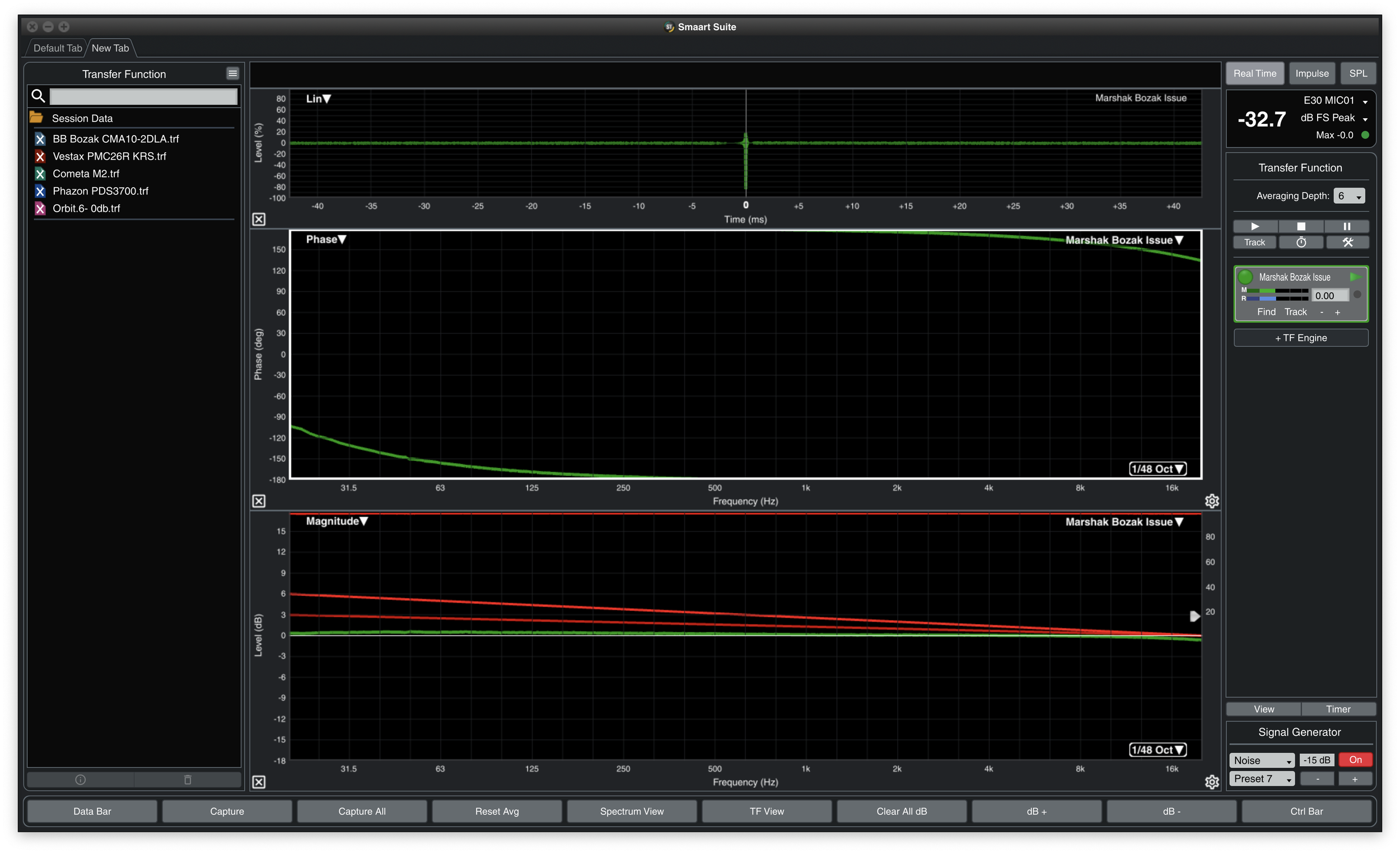
| Measured Delay | 0.00 ms (Base synchronization confirmed) |
| Coherence | Unstable / Noise-Affected (Compromised by Hum) |
| Impulse Response | Downward Spike / Polarity Inversion |
| Phase Response | Single Wrap-around at ±180° (Smooth Group Delay) |
| Magnitude Response | Remarkably Flat (The "Pure" Original Baseline) |
1. Objective
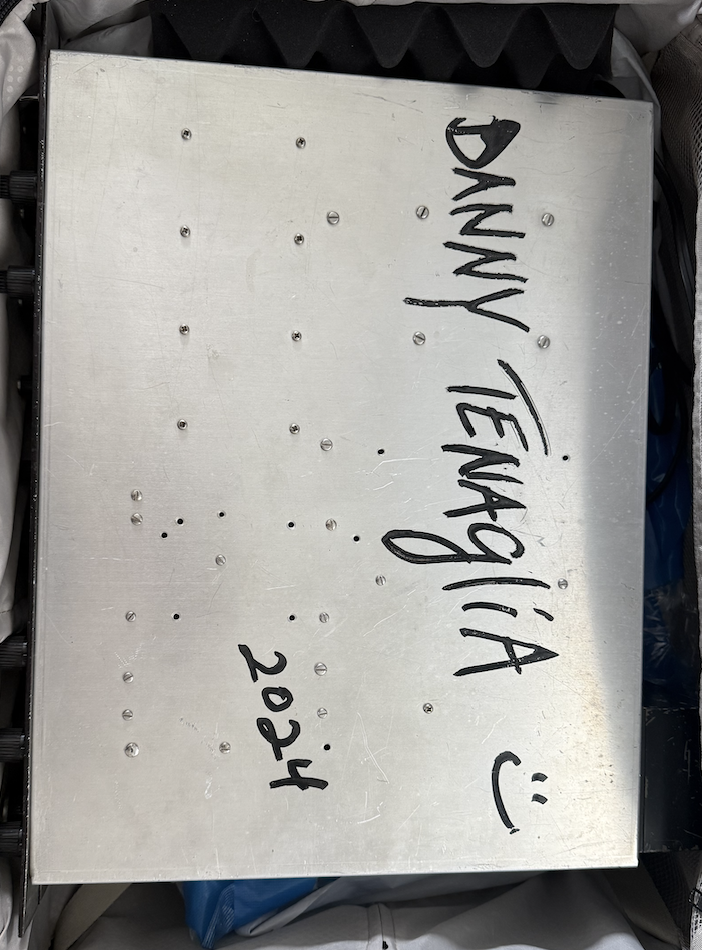
To conduct a precise electronic audit of an original 1983 Marshak Custom Bozak, a one-of-a-kind unit personally signed by the legendary DJ Danny Tenaglia and acquired through his landmark auction on Amplify in 2024. This audit aims to scientifically visualize the progression of electronic component deterioration over four decades, while extracting the "Pure DNA" latent within the circuitry to establish a definitive diagnostic blueprint for its upcoming restoration.
2. Unit Provenance & Maintenance Status
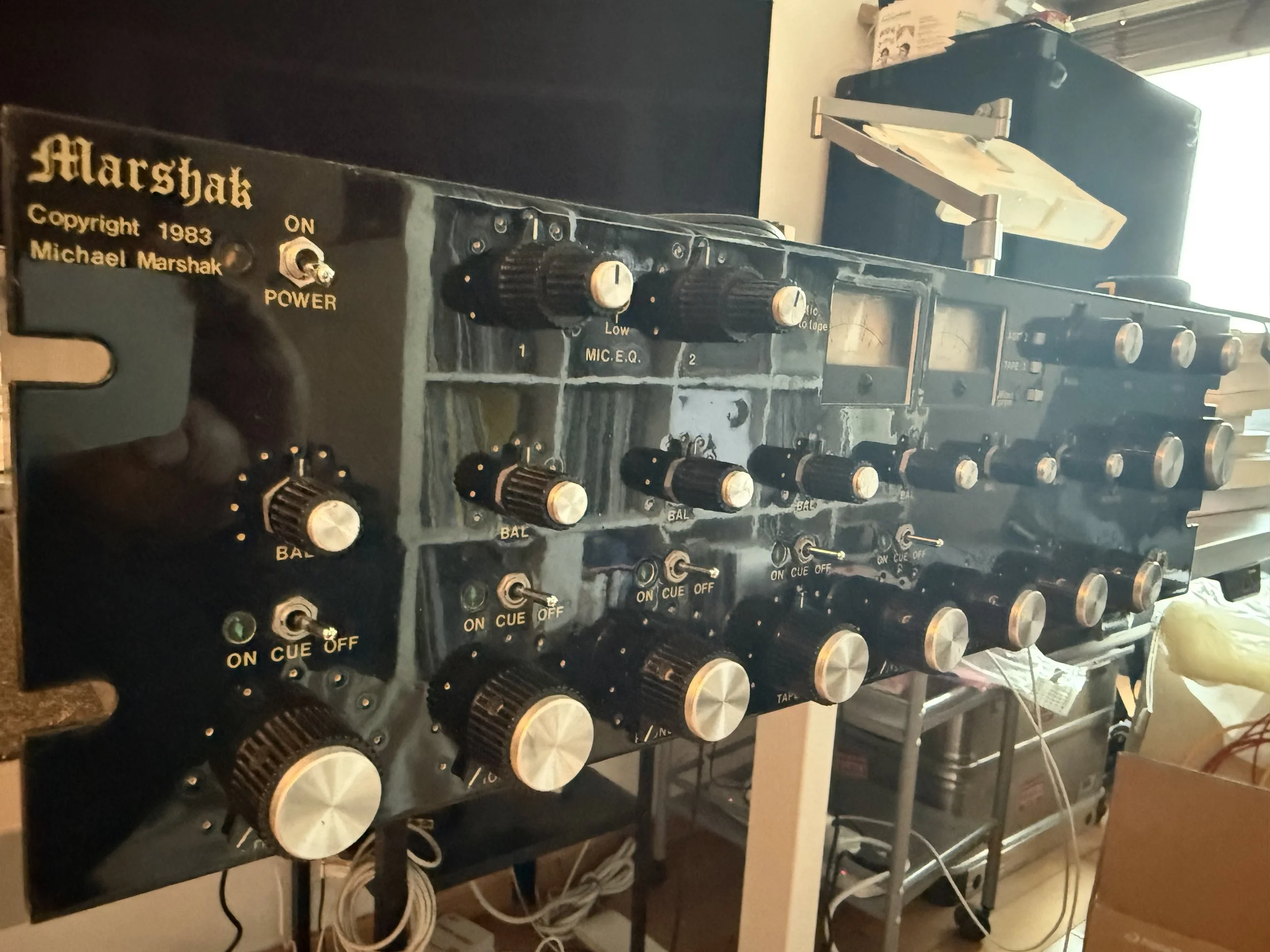
Manufacturing Date: This 1983 original Marshak Bozak, signed by the legendary Danny Tenaglia, stands as a premier artifact of analog history from the transition era of the Bozak company.
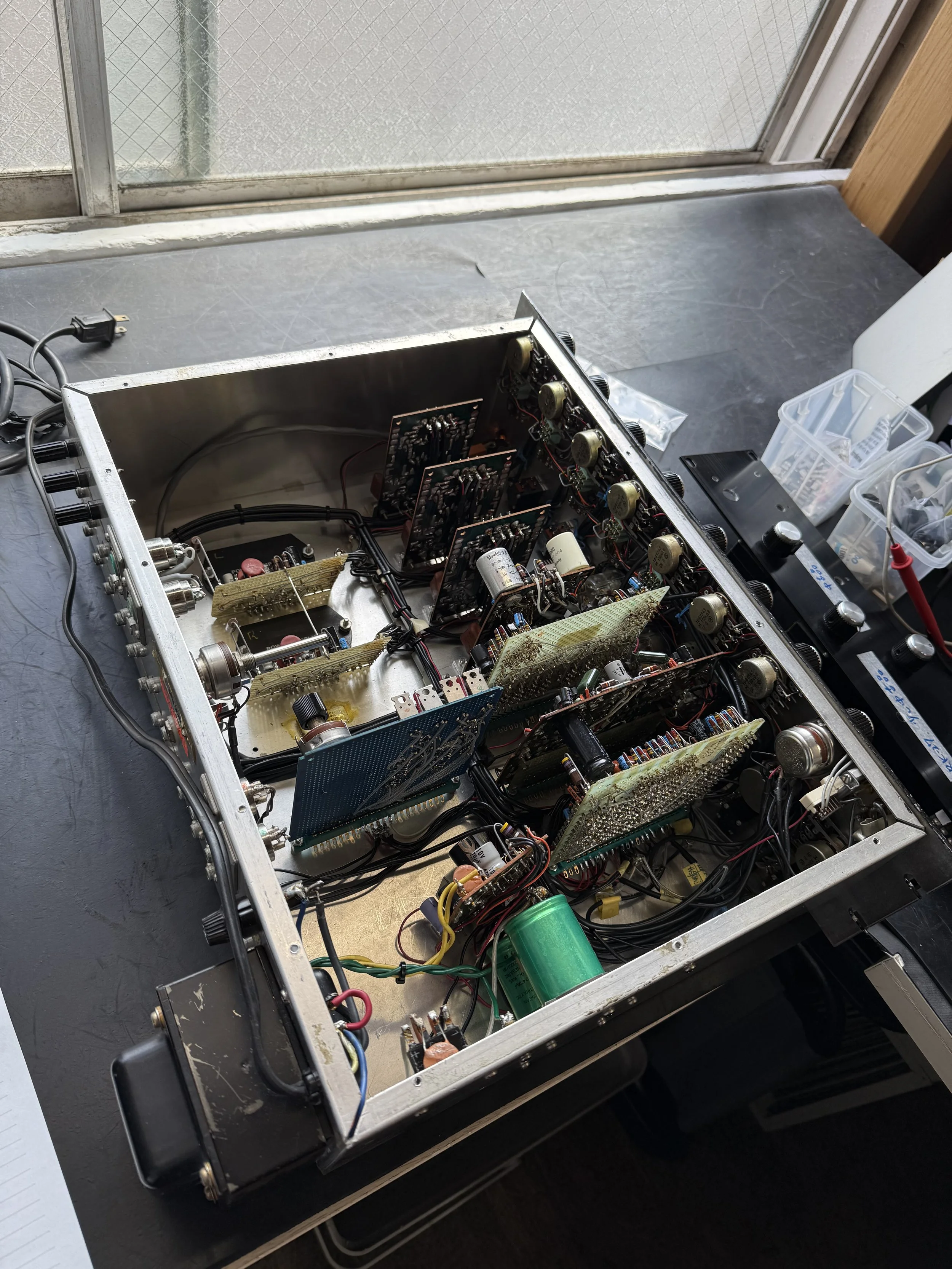
Internal Architecture: Photographic audit of the internal chassis confirms a 100% classic discrete component architecture. The design utilizes vertical "plug-in" daughterboards populated with individual transistors, resistors, and capacitors. This modular, discrete signal path is the physical foundation of the unit’s signature "thick" and powerful summing characteristics.
Build Quality: The internal wiring exhibits professional "military/broadcast-grade" lashing and organization, a hallmark of Michael Marshak’s custom engineering. High-quality potentiometers and robust mechanical construction are evident throughout the unit.
Maintenance Status: It is currently in an unrestored, "survivor" condition(Except for installing an attenuator by KRS on the aux channel). This audit was conducted to document its state of "endangered DNA" before restoration. The measurable instability in the Coherence trace and the prominent 60Hz mains hum are recognized as scientific evidence of electronic fatigue, specifically the drying of electrolytic capacitors in the power supply and signal cards after 43 years of service.
To ensure the highest level of audit integrity and to avoid the pitfalls of "superficial metrics" (as critiqued by GoldenSound), this measurement adheres to the following rigorous standards:
FFT Settings: MTW (Multi-Time Window) with 1/48 Oct smoothing for high-resolution analysis of the noise floor and harmonic structure across all frequency bands.
Averaging: Stable FIFO averaging (16x) to eliminate transient noise and reveal the true electronic behavior.
Host Noise Isolation: The use of the Prism Sound Lyra 2 as the measurement interface ensures complete galvanic isolation from the PC host noise, providing a "Pristine" measurement environment that eliminates jitter and electronic contamination.
Holistic Assessment: We reject the reliance on a single "SINAD" score. Instead, we analyze the relationship between Magnitude, Phase, and Impulse response to understand the "Sonic DNA" in a musical context.
Note: This audit evaluates the hardware in its "as-is" historical state. We distinguish between the unit's original design intent (DNA) and the measurable effects of component aging (Flavor/Issue)
3. Scientific Rigor & Measurement Standards (Audit Integrity)
4. Listening Impression
Hearing this 1983 mixer for the first time was a profound shock. Its sheer thickness, power, and the indescribable gloss of the mid-high frequencies created an enchanting sound that is truly one-of-a-kind—something none of the other mixers in my collection can replicate. However, persistent and mysterious "pops" and "buzzing" noises now plague the output, indicating a critical need for professional repair and restoration.
5. Equipment & Environmental Conditions
Mixer Under Test: Marshak Bozak (1983 Original / Unrestored)
Audio Interface: Prism Sound Lyra 2
Software: Smaart Suite (v9) / Sample Rate: 96 kHz
Test Signal: Pink Noise (-15 dB)
[ Smaart Suite (PC) ]
│ (USB, etc.)
▼
[ Lyra 2 (Audio Interface) ]
│
─ Analog Output AO 1 (Pink Noise / Preset 2)
│ │ < 1.5m Belden 88760 RCA cable (with TRS adapter at AO 1 side) >
│ └───> [Marshak Bozak] Input (LINE IN)
│ │
│ ▼ (Passes through 1983 original discrete circuitry & aging PSU)
│ │
│ [Marshak Bozak] Output (MASTER OUT)
│ │ < 5m Belden 88760 cable (XLR to TRS) >
│ └───> Lyra 2 Analog Input AI 1 (M: Measurement)
│
└─ Analog Output AO 2 (Pink Noise / Preset 2)
│
│< 5m Belden 88760 loopback > < with [XLR(F) -> RCA] & [RCA -> TRS] adapters at AI 2 side >
│
└───> Lyra 2 Analog Input AI 2 (R: Reference)
6. Cable Routing Diagram (Standard Test Configuration)
7. Analysis: Spectrum View - The Anatomy of Hum
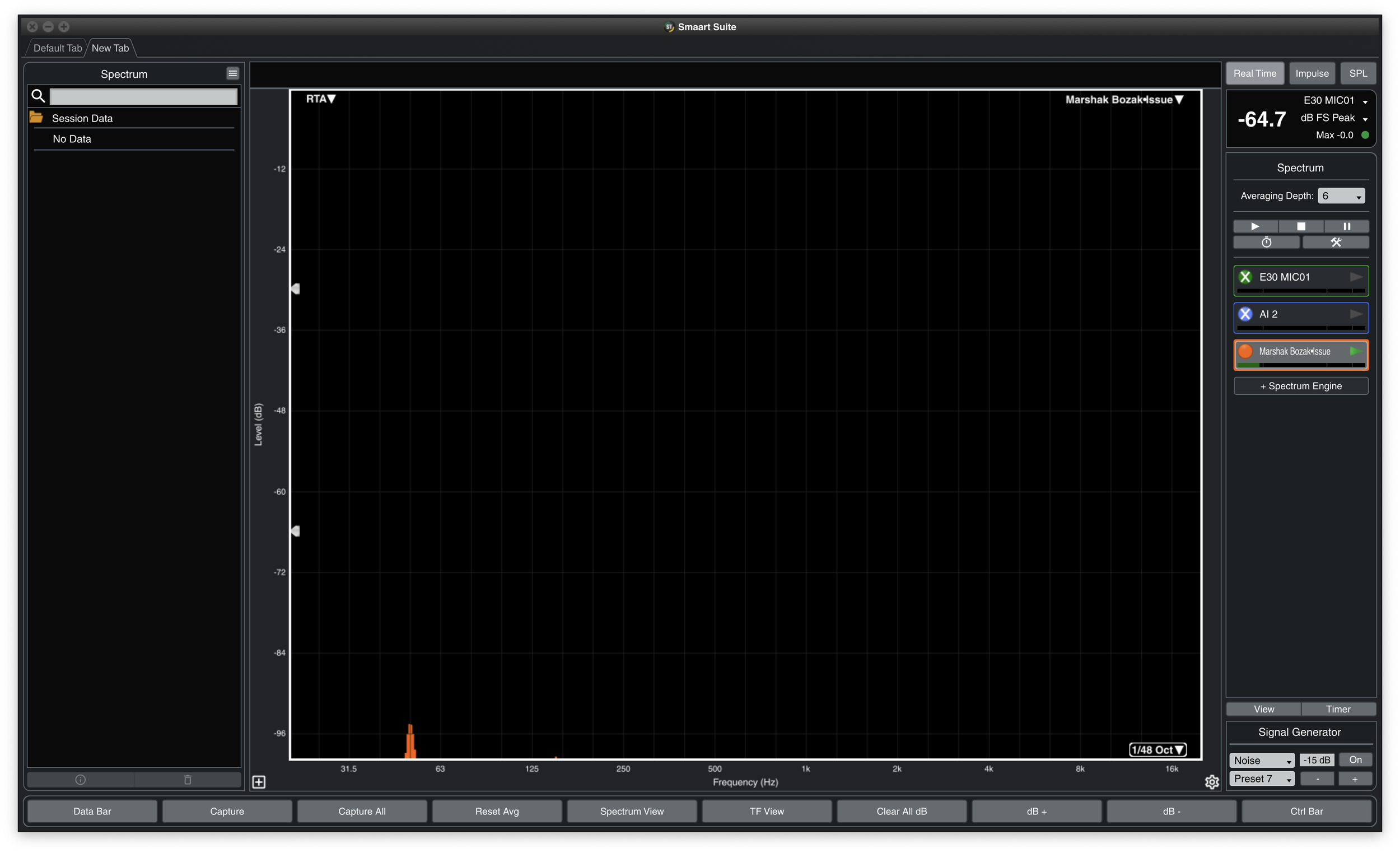
The Spectrum (RTA) analysis with no input signal revealed the "illness" of the unit. A sharp peak at 60Hz and its harmonics (120Hz, 180Hz) is clearly visible, identifying a classic "Mains Hum." This is typical evidence of aged power supply capacitors failing to filter the AC ripple, causing the constant "buzzing" heard during operation.
The "Lin" (Linear Impulse Response) graph provides the most damning evidence of its current condition:
Downward Spike (Polarity Reversal): The spike at 0.00 ms points downward, proving the unit is outputting a reversed polarity signal. This could be due to a historical wiring error or an original circuit design that inverts the phase.
Thickened Baseline: The zero-line is not a clean, thin thread but a "thick, fuzzy green band." This visualizes the high level of residual noise and hum drowning the transient purity of the mixer.
8. Analysis: Impulse Response - Polarity and Noise Floor
Because the Phase graph's vertical axis is fixed at 360° (±180°), the line appears to jump from the bottom to the top (Wrap-around). This is not a break in data but a mathematical representation of the signal's timing. The Marshak Bozak exhibits a smooth, single wrap-around, indicating a very musical and natural group delay. However, the "thickness" of the line reflects the jitter caused by the underlying noise floor.
9. Analysis: Phase Response - Understanding the Wrap
11. Conclusion
The historical context provided in Tim Lawrence's Love Saves The Day perfectly illuminates the true genius behind this Marshak Custom Bozak. As sound system pioneer Bob Casey notes in the book regarding the frustration DJs had with original Bozaks: "The Bozak came from the factory with two phono inputs, two auxiliary inputs, and two microphone inputs... The combinations could only be two phono and two tape inputs or three phono and one tape input, and that was it." This limitation drove the rise of the UREI 1620, which "had six inputs, and all of them were stereo."
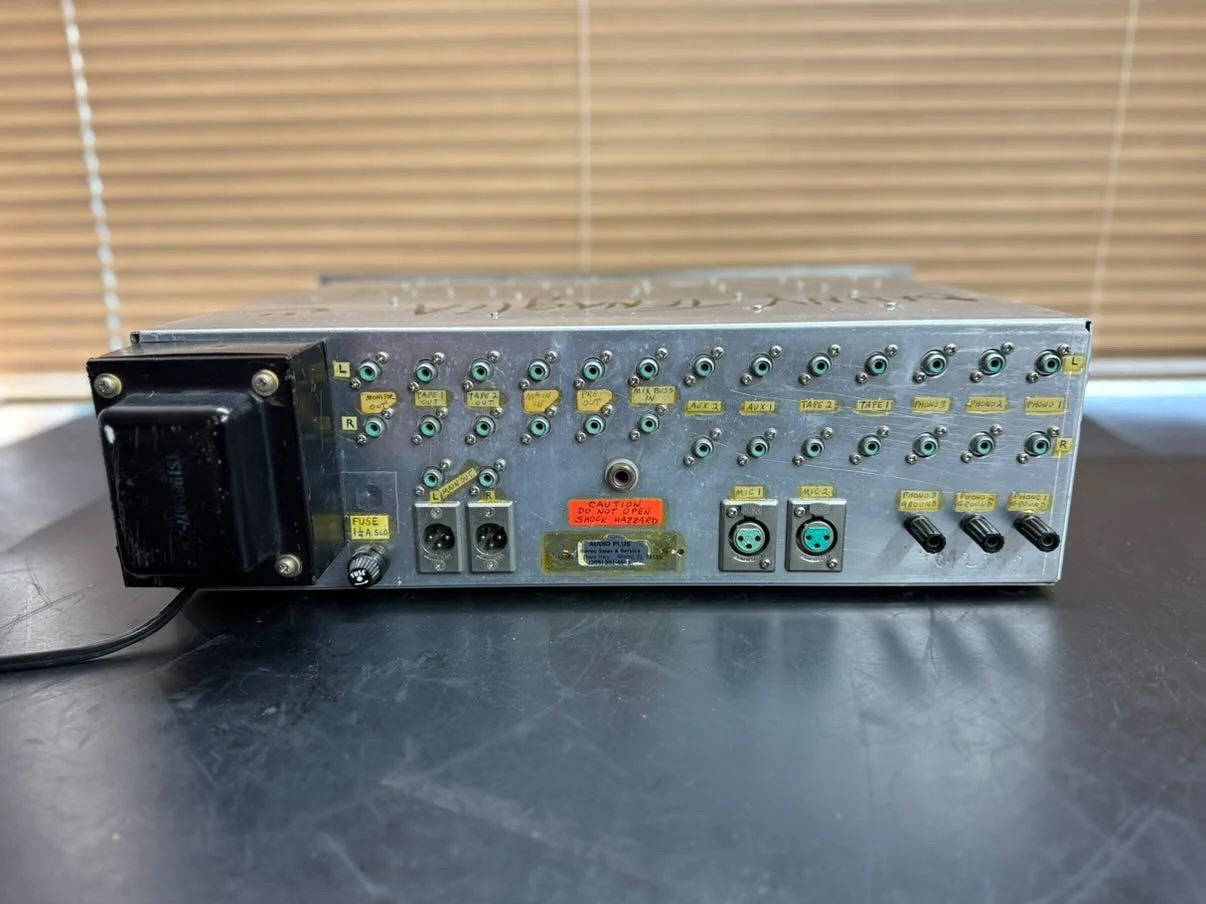
Faced with this, Michael Marshak engineered the ultimate hybrid. He answered the DJs' demands by adopting the highly flexible 6-channel routing configuration (3 Phono / 2 Aux / 1 Mic) to rival the UREI. However, rather than compromising the audio quality with ICs, he meticulously preserved the pure, early-era Bozak full-discrete boards and faceplate for the core audio path.
Our Smaart data serves as the scientific proof of this masterful engineering. The absence of artificial EQ coloration (the remarkably flat Magnitude) and the pure analog time delay (smooth Phase curve) confirm that Marshak successfully expanded the mixer's workflow without corrupting its pristine original Bozak DNA. It stands as a historical testament to preserving absolute sonic purity while answering the practical needs of the dance floor.
Prepared by Psycho Acoustic Lab - Electronic Audit Series Vol. 06
Comparing this unit to the Buzzy Beck version (Vol. 05) reveals a stunning paradox. While the restored unit features a +12dB "High-Mid Gloss," this 1983 original is remarkably flat. This suggests the "enchanting" sound is not a result of frequency boosting, but the inherent resolution and temporal alignment of the original discrete circuitry. The Buzzy Beck restoration appears to be a "Modern High-Fidelity Hybrid," whereas this unit represents the "Pure Heritage."
10. Analysis: Sonic DNA - The Hidden Flat Line