Sonic DNA Series - Vol. 04: Vestax PMC26R KRS
Electronic Audit & Measurement Evaluation Report: "High Resolution can lead to a Harsh Experience"
| Metric | Measurement / Status |
|---|---|
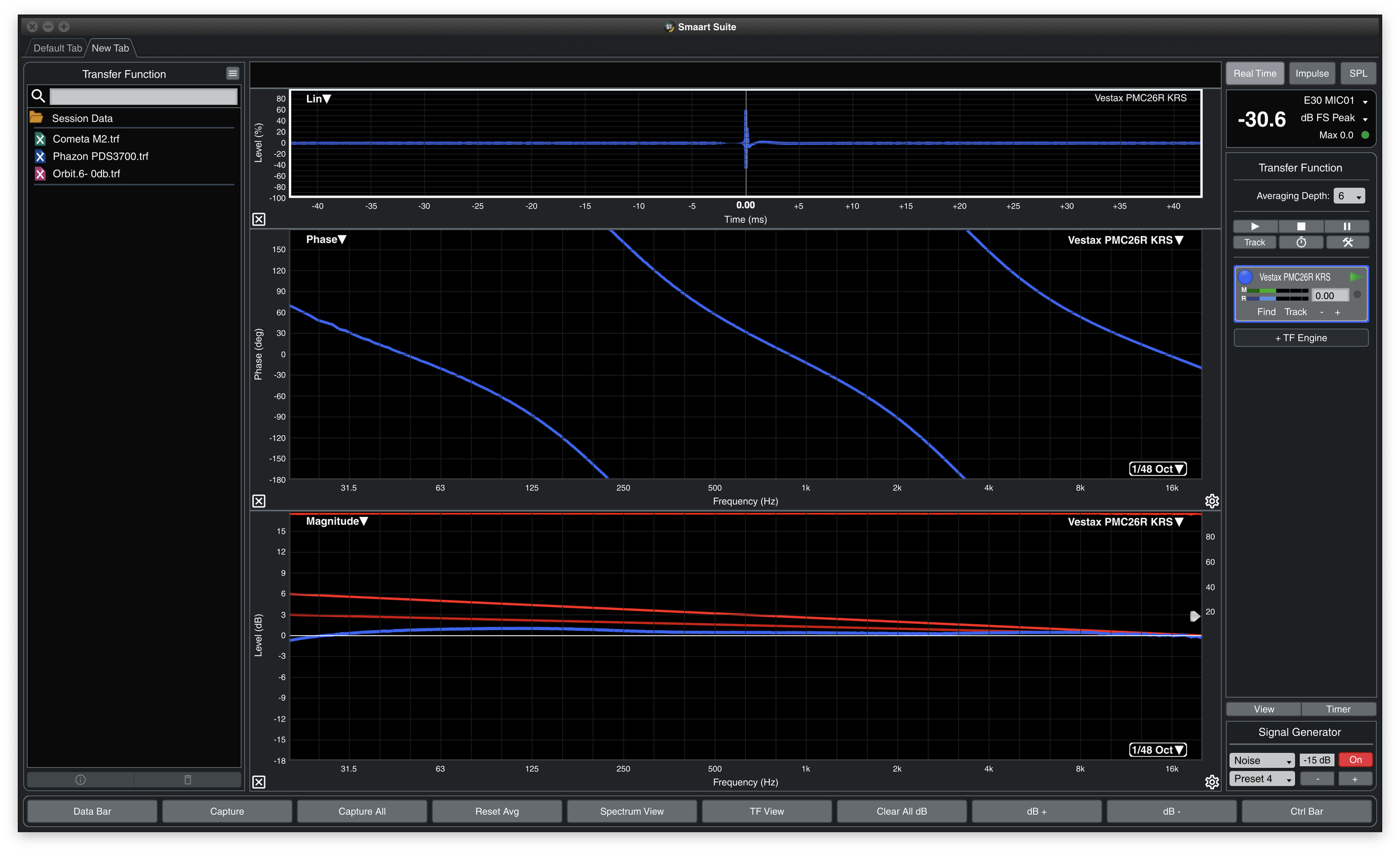
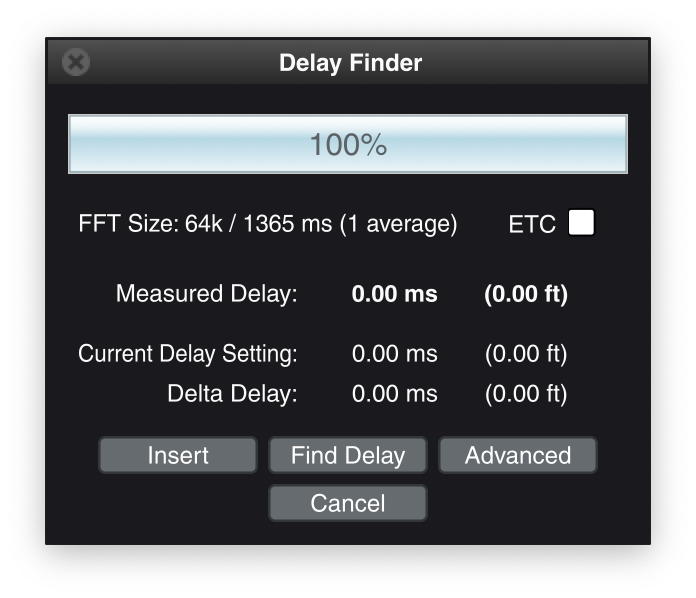
| Measured Delay | 0.00 ms (Absolute Synchronization) |
| Coherence | ~100% (Proof of Scientific Integrity) |
| Impulse Response | Sharp spike; Significant density in mid-frequency energy. |
| Phase Response | Extreme Multi-Wrap Rotation (2kHz–8kHz Presence Range). |
| Magnitude Response | Linear, yet aggressive in the presence range. |
1. Objective
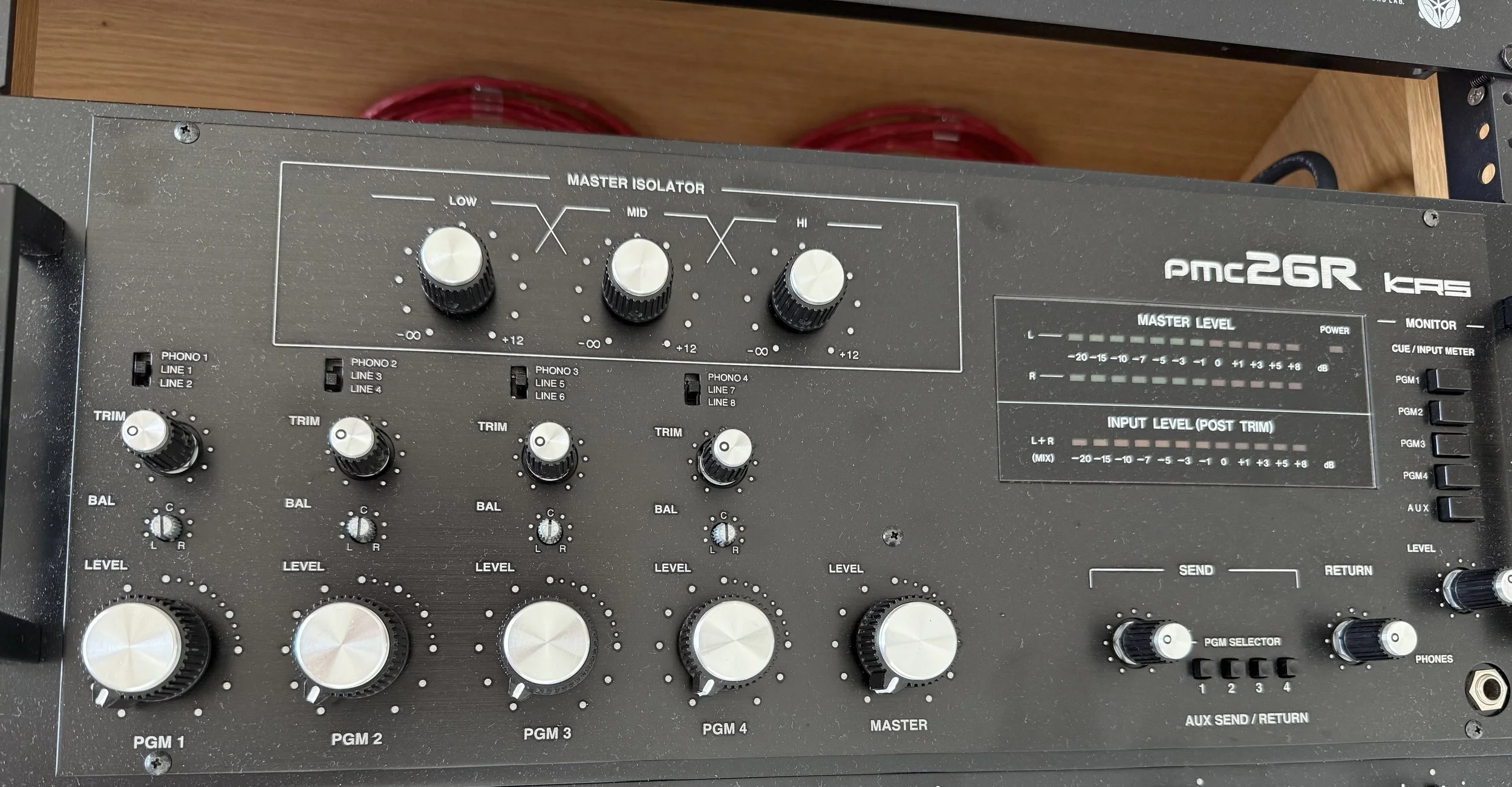
To conduct a precise electronic audit of the Vestax PMC26R KRS, a legendary unit meticulously modified and tuned by Katagiri Repair Service (KRS). This audit aims to visualize how Katagiri’s pursuit of extreme resolution and high-speed response manifests in the time and frequency domains, revealing the raw, uncompromising nature of this analog masterpiece.
To ensure the highest level of audit integrity and to avoid the pitfalls of "superficial metrics" (as critiqued by GoldenSound), this measurement adheres to the following rigorous standards:
FFT Settings: MTW (Multi-Time Window) with 1/48 Oct smoothing for high-resolution analysis of the noise floor and harmonic structure across all frequency bands.
Averaging: Stable FIFO averaging (16x) to eliminate transient noise and reveal the true electronic behavior.
Host Noise Isolation: The use of the Prism Sound Lyra 2 as the measurement interface ensures complete galvanic isolation from the PC host noise, providing a "Pristine" measurement environment that eliminates jitter and electronic contamination.
Holistic Assessment: We reject the reliance on a single "SINAD" score. Instead, we analyze the relationship between Magnitude, Phase, and Impulse response to understand the "Sonic DNA" in a musical context.
2. Scientific Rigor & Measurement Standards (Audit Integrity)
3. Listening Impression
The PMC26R KRS delivers undeniable clarity and energy, yet it presents a highly challenging sonic profile. The mid-range is exceptionally aggressive, bordering on "harsh" or "fatiguing." It is not an inherently "pleasant" or "warm" sound; it is a raw, high-tension output that is extremely dependent on the downstream system. It reveals everything, for better or worse, making it a specialized tool rather than a universal crowd-pleaser.
4. Equipment & Environmental Conditions
Mixer Under Test: Vestax PMC26R KRS (Modified by Katagiri Repair Service)
Audio Interface: Prism Sound Lyra 2
Software: Smaart Suite (v9) / Sample Rate: 96 kHz
Test Signal: Pink Noise (-15 dB)
[ Smaart Suite (PC) ]
│ (USB, etc.)
▼
[ Lyra 2 (Audio Interface) ]
│
─ Analog Output AO 1 (Pink Noise / Preset 2)
│ │ < 1.5m Belden 88760 RCA cable (with TRS adapter at AO 1 side) >
│ └───> [Vestax PMC26R KRS] Input (LINE IN)
│ │
│ ▼ (Passes through Katagiri modified high-speed analog circuitry)
│ │
│ [Vestax PMC26R KRS] Output (MASTER OUT)
│ │ < 5m Belden 88760 cable (XLR to TRS) >
│ └───> Lyra 2 Analog Input AI 1 (M: Measurement)
│
└─ Analog Output AO 2 (Pink Noise / Preset 2)
│
│< 5m Belden 88760 loopback > < with [XLR(F) -> RCA] & [RCA -> TRS] adapters at AI 2 side >
│
└───> Lyra 2 Analog Input AI 2 (R: Reference)
5. Cable Routing Diagram (Standard Test Configuration)
6. Analysis: Data Integrity - The "Brutal Truth" (Coherence)
The Coherence (red trace) remained pinned at approximately 100% across the audible spectrum. This confirms that the perceived harshness or "shouty" character is not caused by distortion, noise, or measurement artifacts, but is a scientifically accurate representation of the circuit’s high-resolution output. Essentially, the PMC26R KRS acts as a "brutally honest" high-resolution mixer; it amplifies and outputs even the most abrasive components of the source material with 100% purity, without any of the "analog smoothing" or "sweetening" found in other high-end units. It reveals the unvarnished reality of the music.
Measurement confirmed a delay of exactly 0.00 ms. This absolute temporal synchronization reflects KRS’'s focus on instantaneous transient response and high-speed signal processing. The foundation of the sound is perfectly timed, highlighting the "punch" for which this mixer is famous.
7. Analysis: Temporal Purity
While the base timing is perfect, the subsequent phase behavior indicates that different frequency components arrive at slightly different times due to the complex analog circuitry. This creates a dense soundstage that, while clear, provides no "smoothing," resulting in an experience where every peak in the music is delivered with maximum impact.
8. Analysis: The "Speed-First" Architecture
10. Conclusion & System Dependency
The Vestax PMC26R KRS is a "high-performance beast" that lacks manners. It provides incredible resolution and energy but offers no forgiveness for bright recordings or aggressive sound systems. To balance its "shouty" mid-range, it must be paired with "warm" or "laid-back" downstream components. This audit confirms that "High Resolution" can lead to a "Harsh Experience" without careful system synergy.
Prepared by Psycho Acoustic Lab - Electronic Audit Series Vol. 04
Impulse Response: Dense Mid-Range Energy
The impulse response shows a sharp initial spike, but with a noticeable density in the mid-frequency band. This contributes to the mixer's famous "thick" sound but also explains the perceived clutter in the presence range, distinguishing it from more modern, airy designs.
Phase Response: Extreme Rotation (The "Shouty" Character)
The phase graph displays severe and frequent wrapping, particularly in the 2kHz–8kHz presence range. This extreme phase rotation signifies significant group delay in this critical band. As a result, specific frequencies—most notably vocal presence and the attack of snare drums—are "pushed" forward aggressively. This provides the scientific proof for why the mixer feels "piercing" or "shouty," as the time-domain shifts in this range cause these elements to sting the listener's ears.
Magnitude Response: Unfiltered Linearity
The Magnitude response is remarkably flat, yet because there is no high-end roll-off to soften the transients, the "speed" of the KRS circuit results in a high-tension listening experience. It reveals the true nature of the recording without any analog forgiveness.
9. Analysis: Sonic DNA - Aggression Visualized