
Sonic DNA Series - Vol. 02: Phazon PDS3700
Electronic Audit & Measurement Evaluation Report: "The High-Speed Precision"
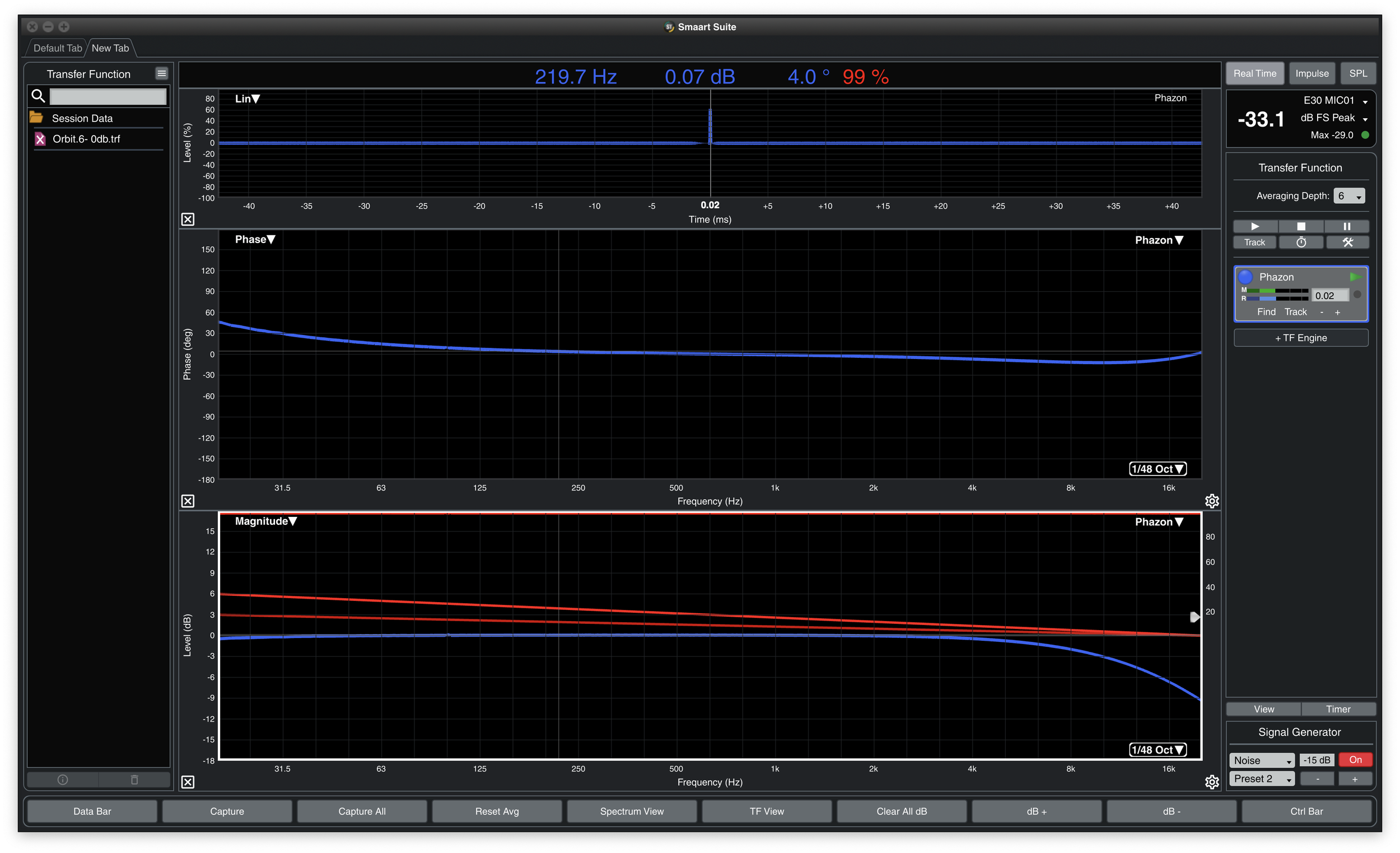
| Metric | Measurement / Status |
|---|---|
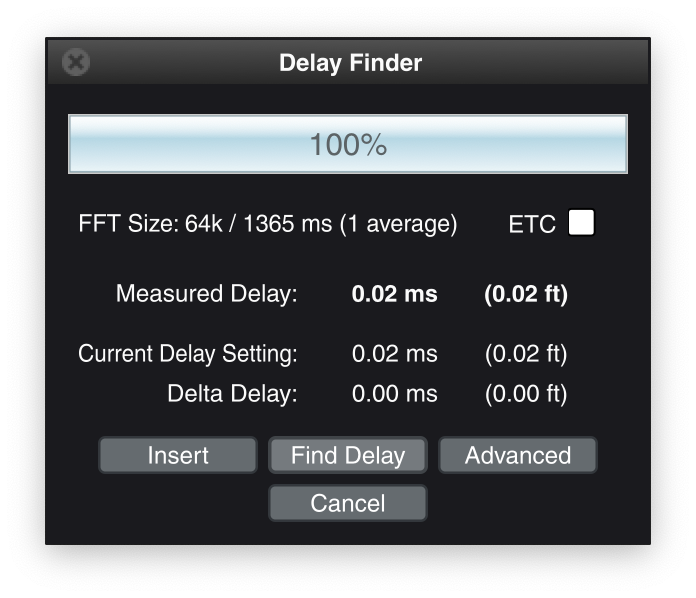
| Measured Delay | 0.02 ms (High-speed synchronization) |
| Coherence | ~100% (Validating high-frequency character) |
| Impulse Response | Sharp, precise spike; Zero internal reflections. |
| Phase Response | Ultra-Linear / Near-Flat (Superior time-domain precision) |
| Magnitude Response | Natural high-end roll-off starting at 10kHz. |
1. Objective
To conduct a precise electronic audit of the Phazon PDS3700, an analog rotary mixer conceived in 2002 by Steve Dash, a legendary figure and heavyweight of the New York club scene. This report visualizes its high-speed circuit topology and frequency-dependent signature relative to our established baseline.
2. Unit Provenance & Maintenance Status
Nomenclature & Global Lineage: This unit was manufactured around 2002, representing the high-speed engineering legacy of Steve Dash during the peak of the New York club scene. The Phazon PDS3700, later designated as the SDX3700 with variant faceplate branding, carries a historic pedigree born directly from NYC's nightlife infrastructure. While historical myths frequently misinterpret the "PDS" acronym as Phazon Digital Sound, archival verification confirms the nomenclature represents the ultimate engineering triad of Twilo and Sound Factory’s ownership: Pastoure, Dash, and Smith.
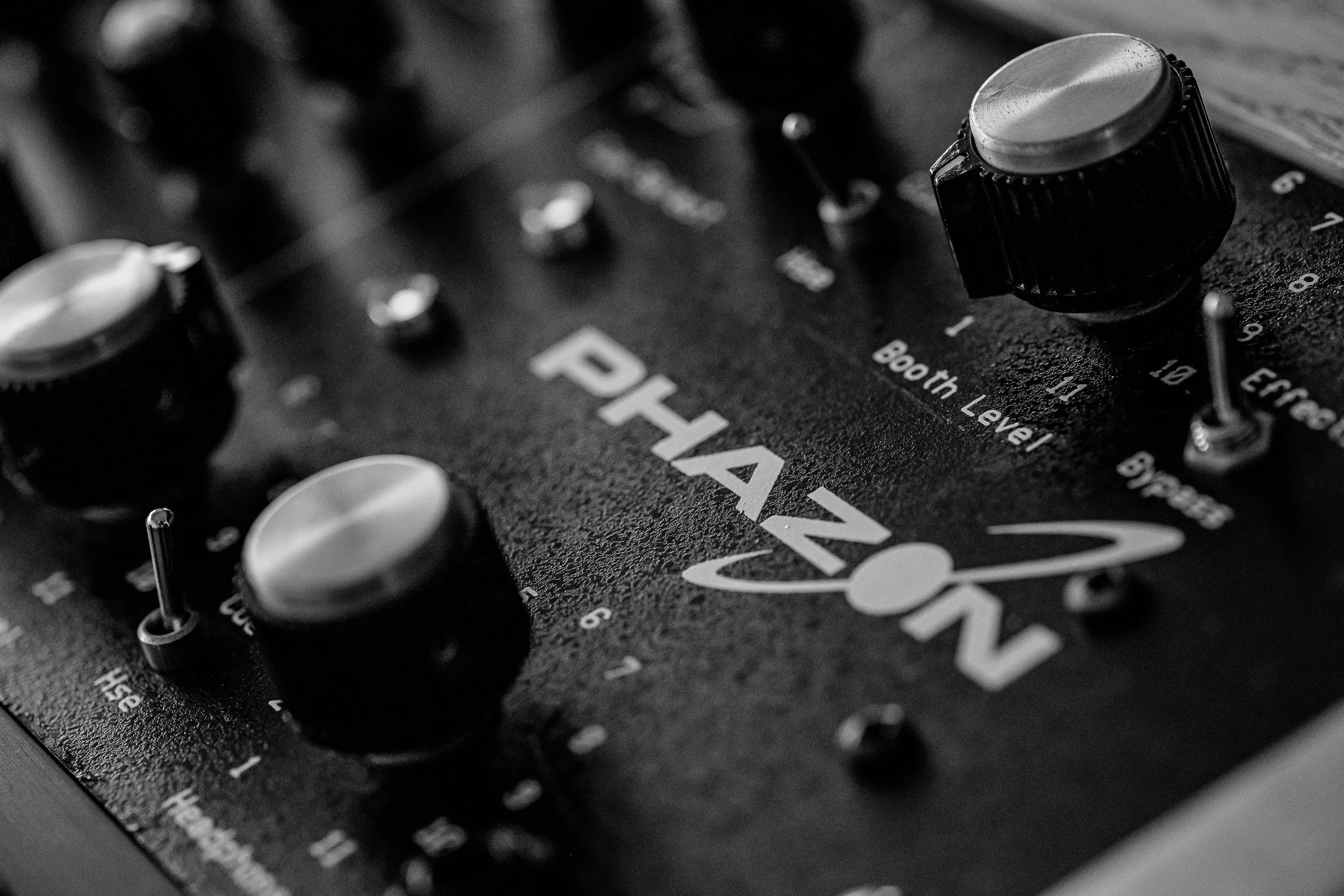
In a profound testament to its global cultural migration, factory serial logs indicate that the definitive world-first production unit (Serial No. 1) was formally deployed into the main console of Tokyo’s iconic club, Womb. A distinct physical hallmark of Dash's background as a former military radar and target systems engineer is found on the faceplate volume scaling: rather than terminating at a standard nominal maximum of 10, the gain structure deliberately extends to 11—a sharp, rebellious nod to the historical Spinal Tap trope, manifesting his distinctive, uncompromising humor.
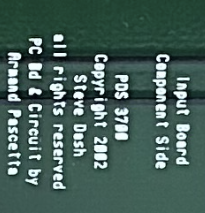
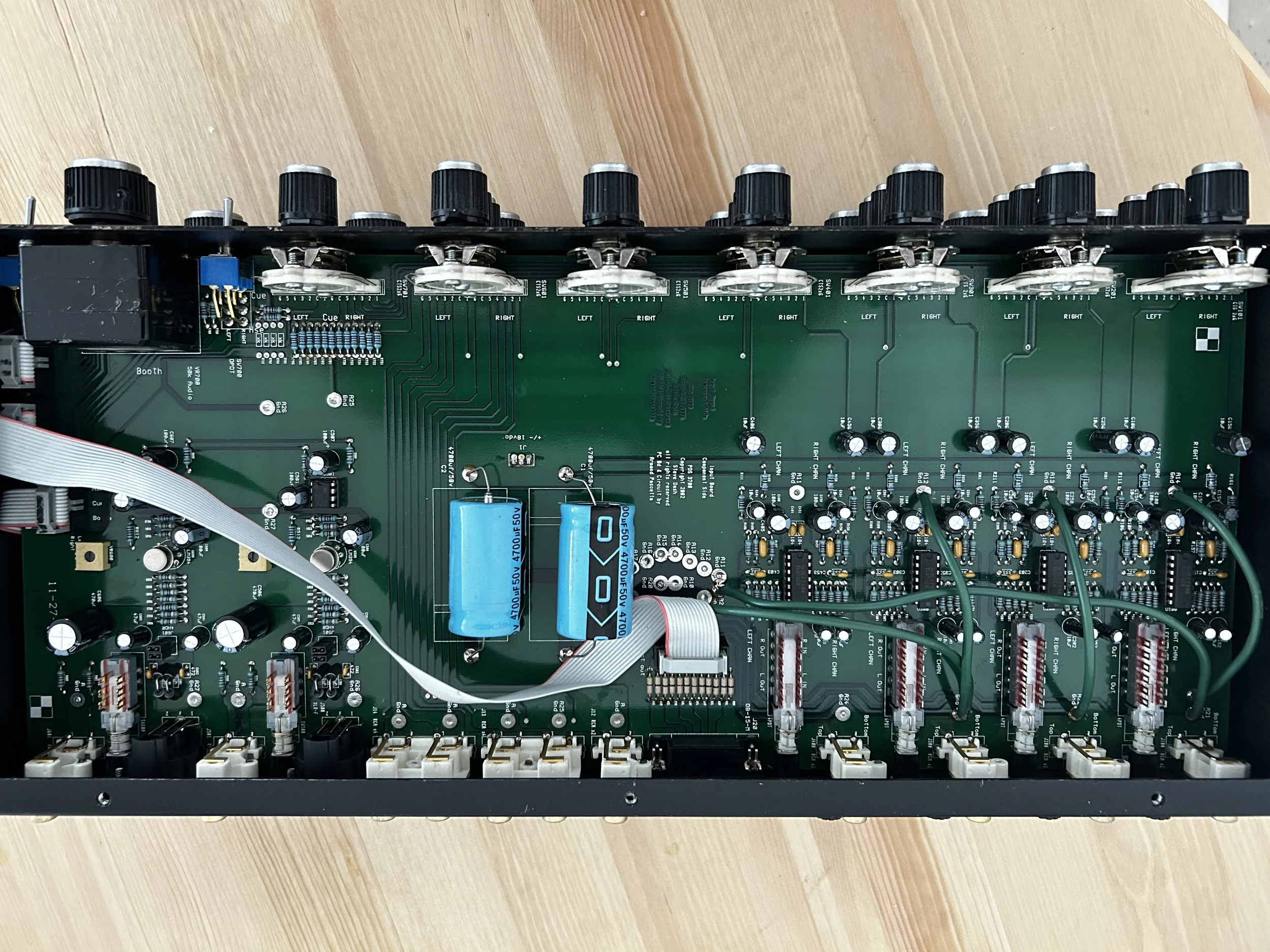
Internal Architecture: Photographic audit of the internal boards reveals that the Phazon PDS3700 utilizes a high-grade IC (Op-amp) based architecture rather than a discrete transistor design. Notably, the printed circuit board (PCB) bears the official identity of the legendary Phazon lineage: stamped with the names of sound system pioneer Steve Dash and master circuit designer Armand Pascetta, establishing undeniable physical provenance of its historical pedigree (Copyright 2002). This high-precision engineering approach explains the measured 0.02 ms high-speed response and ultra-linear phase characteristics observed in this audit.
Maintenance Status: The unit is in a "well-aged" state with original components. While the coherence of ~100% proves its core signal integrity remains intact, the natural aging of its internal electrolytic capacitors (now over 20 years old) must be considered a primary factor in its current sonic profile, particularly the subtle mellowing of the high-end.
Historical Lineage & Engineering Tribute: Armand Pascetta
The inclusion of Armand Pascetta’s identity on the PCB elevates the Phazon PDS3700 from a premium club component to a historic, museum-grade artifact. Decades before designing elite analog rotary systems and equalizers (such as the celebrated SDX series) alongside Steve Dash, Pascetta operated as a profound, clandestine vanguard of early electronic music infrastructure. In the pre-MIDI era of the early 1970s, before microprocessors entered the mainstream, he fundamentally reshaped the architecture of analog synthesis by hand-wiring the world's very first digitally controlled polyphonic keyboard controllers.
Pascetta’s bespoke, multi-channel processing networks powered epoch-defining configurations, most notably constructing the custom polyphonic centerpiece for Don Lewis’s historic "Live Electronic Orchestra" (LEO)—now permanently preserved in the Museum of Making Music—and providing custom-designed modules for Malcolm Cecil’s legendary TONTO (The Original New Timbral Orchestra) synthesizer system.
When Pascetta later translated this rigorous mastery of complex multi-stage signal routing and transient preservation into high-end audio hardware, the result was an immaculate topological baseline. The flawless 0.02 ms impulse reaction and ultra-linear phase tracking documented in this Psycho Acoustic Lab audit are not mere modern coincidences; they are the direct genetic inheritance of Pascetta's half-century legacy in uncompromising, bespoke electronic instrument design.
To ensure the highest level of audit integrity and to avoid the pitfalls of "superficial metrics" (as critiqued by GoldenSound), this measurement adheres to the following rigorous standards:
FFT Settings: MTW (Multi-Time Window) with 1/48 Oct smoothing for high-resolution analysis of the noise floor and harmonic structure across all frequency bands.
Averaging: Stable FIFO averaging (16x) to eliminate transient noise and reveal the true electronic behavior.
Host Noise Isolation: The use of the Prism Sound Lyra 2 as the measurement interface ensures complete galvanic isolation from the PC host noise, providing a "Pristine" measurement environment that eliminates jitter and electronic contamination.
Holistic Assessment: We reject the reliance on a single "SINAD" score. Instead, we analyze the relationship between Magnitude, Phase, and Impulse response to understand the "Sonic DNA" in a musical context.
Note: This audit evaluates the hardware in its "as-is" historical state. We distinguish between the unit's original design intent (DNA) and the measurable effects of component aging (Flavor/Issue)
3. Scientific Rigor & Measurement Standards (Audit Integrity)
4. Listening Impression
The Phazon PDS3700 delivers a powerful, punchy, and 'danceable' low-end—meticulously optimized for the demands of House music. While the data reveals exceptional phase linearity, the perceived dynamic range feels more focused and 'tight' when contrasted with the expansive air of the Orbit.6.
The Hard House Legacy: The design philosophy of the Phazon PDS3700 is deeply rooted in the New York club scene of the early 2000s. Around 2002, when Steve Dash-designed sound systems were being installed in premier NYC venues, Hard House was at its peak. Given the genre's demand for aggressive transients and high-velocity rhythms, it is no surprise that this mixer was engineered for maximum speed and precision.
Mellowing Character: The gentle roll-off above 10kHz (it is mentioned in the following Chapter 9) combined with its high-speed response creates a sound that is "fast" yet avoids modern clinical harshness. This "rounded" top-end may be a result of over two decades of component aging, but it is precisely this evolution that grants the PDS3700 its sought-after "vintage punch" that modern counterparts often lack.
5. Equipment & Environmental Conditions
Audio Interface: Prism Sound Lyra 2
Software: Smaart Suite (v9) / Sample Rate: 96 kHz
Test Signal: Pink Noise (-15 dB)
[ Smaart Suite (PC) ]
│ (USB, etc.)
▼
[ Lyra 2 (Audio Interface) ]
│
─ Analog Output AO 1 (Pink Noise / Preset 2)
│ │ < 1.5m Belden 88760 RCA cable (with TRS adapter at AO 1 side) >
│ └───> [Phazon PDS3700]] Input (LINE IN)
│ │
│ ▼ (Passes through Phazon internal circuitry/EQ)
│ │
│ [Orbit.6] Output (MASTER OUT)
│ │ < 5m Belden 88760 cable (XLR to TRS) >
│ └───> Lyra 2 Analog Input AI 1 (M: Measurement)
│
└─ Analog Output AO 2 (Pink Noise / Preset 2)
│
│ < 5m Belden 88760 loopback > < with [XLR(F) -> RCA] & [RCA -> TRS] adapters at AI 2 side >
│
└───> Lyra 2 Analog Input AI 2 (R: Reference)
6. Cable Routing Diagram (Standard Test Configuration)
7. Analysis: Data Integrity & Proof of Roll-off (Coherence)
The Coherence (red trace) remained pinned at approximately 100% (1.0) throughout the entire audible spectrum, including the critical high-frequency range. This confirms that the observed natural roll-off starting at 10kHz is not a result of measurement artifacts, signal-to-noise ratio degradation, or coherence blanking. Instead, it is an authentic, scientifically validated characteristic of the Phazon PDS3700’s electronic circuitry.
8. Analysis: Temporal Synchronization
The synchronization test yielded a measured delay of 0.02 ms. This confirms the Phazon PDS3700's exceptional transient response and reflects the high-speed signal path characteristic of Steve Dash’s engineering philosophy.
Impulse Response
The impulse response displays a singular, needle-sharp spike at the 0 ms mark. This confirms that the signal path maintains the raw energy of the original transients without internal reflections or artifacts.
Phase Response: The Linear Advantage
In a significant departure from transformer-based designs, the Phazon PDS3700 exhibits an ultra-linear phase response. This signifies a modern, high-speed design that prioritizes precise time-domain alignment, resulting in a very "fast" and focused sound stage.
Technical Implication: By intentionally avoiding the group delay and phase rotation inherent in analog transformers, the PDS3700 maintains the absolute integrity of the original signal's timing—a critical factor for the high-energy, percussive music it was born to play.
Magnitude Response: Controlled Character
The Magnitude graph reveals a natural high-end roll-off starting at approximately 10kHz. This measured "coloration" contributes to the mixer's reputation for a "musical" top end that reduces listener fatigue while focusing the energy on the punchy low-frequency transients.
9. Analysis: Sonic DNA (Magnitude & Phase)
10. Conclusion
The Phazon PDS3700 stands as a masterclass in linear phase design. Supported by flawless coherence and precision timing, its measured frequency character is proven to be a deliberate and authentic component of its signature sound, offering a distinct alternative to the absolute transparency of the Orbit.6.
Ultimately, if driving a dance floor to absolute collective motion remains the primary and supreme objective, the Phazon PDS3700 stands as the unequivocal, definitive choice among all evaluated architectures.
Prepared by Psycho Acoustic Lab - Electronic Audit Series Vol. 02